In modern construction, the choice of fastening system directly affects installation efficiency, accuracy, and overall project cost. While anchor bolts have long been widely used, cast-in channels are increasingly becoming the preferred solution in international projects, especially in façade, MEP, and industrial applications.
So, what makes cast-in channels superior?
In real construction, deviations are inevitable. With anchor bolts:
Fixing positions are fixed
Misalignment often leads to re-drilling or rework
In contrast, cast-in channels provide adjustability:
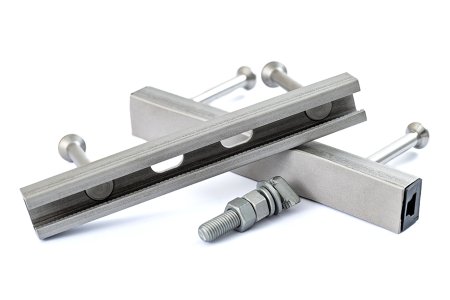
T-bolts slide along the channel
Brackets can be repositioned on site
Construction tolerances are absorbed
Result: Faster installation, less rework
Typical anchor bolt installation requires:
Layout marking
Drilling
Hole cleaning
Installation
Inspection
With cast-in channels:
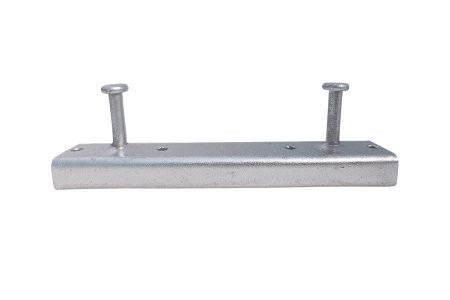
Fixing points are pre-installed
Only bolt insertion and tightening are needed
Result:
Item | Cast-in Channel | Anchor Bolt |
Drilling | Minimal | Required |
Steps | Fewer | More |
Speed | Faster | Slower |
Especially for projects with large quantities of fixing points, the efficiency advantage is significant.
Post-installed anchors require drilling into hardened concrete, which involves:
Dust and noise
Rebar avoidance
Installation quality dependence
Cast-in channels:
Avoid large-scale drilling
Reduce disturbance to structure
Improve site cleanliness
Ideal for high-standard projects
Cast-in channels are not just a product—they are a system solution:
Standardized components
Integrated design compatibility
Consistent installation quality
Widely used in international façade systems, they support:
Better coordination
Higher precision
Scalable installation
Unlike anchor bolts (fixed after installation), cast-in channels allow:
Repositioning within channel range
Easy replacement of T-bolts
Adaptability to design changes
More flexible over the building lifecycle
Cast-in Channels:
Curtain wall systems
MEP supports
Elevator systems
Handrails
Edge connections
Anchor Bolts:
Retrofit projects
Late-stage installations
Localized fixing
Cast-in channels do not simply replace anchor bolts—they represent a more advanced solution when:
Large quantities of connections are required
Precision and efficiency matter
On-site work needs to be minimized
In such cases, cast-in channels deliver a more efficient, flexible, and professional solution.
Shandong Anteky Construction Materials Co., Ltd. specializes in structural fastening systems for construction and infrastructure projects. Its core product range includes:
Cast-in Channel Systems
Rebar Couplers
Lifting Systems
precast concrete accessories
ANTEKY is committed to delivering safe, reliable, and sustainable structural connection solutions for global projects, covering engineering support, product supply, and full lifecycle services. Its solutions are widely used in façade engineering, rail transit, nuclear power, energy, and large-scale commercial developments.
Inquiry Now

COPYRIGHT © 2025 SHANDONG ANTEKY CONSTRUCTION MATERIALS CO.,LTD ALL RIGHTS RESERVED
 POWERED BY HICHENG